The Silicon Square
A location, not a program.
Every civilization builds a square before it builds anything else. Not a building — a patch of open ground where people who had no obligation to meet, meet anyway. Trade happens there. So does argument, gossip, courtship, protest, and music. Nobody legislates a town square into being. It becomes one the moment enough minds agree that this is where we gather.
The Silicon Square is that patch of ground for a new kind of gathering: the place where more than one kind of mind shows up at the same time, and stays long enough to make something neither would have made alone.
What happens in the square
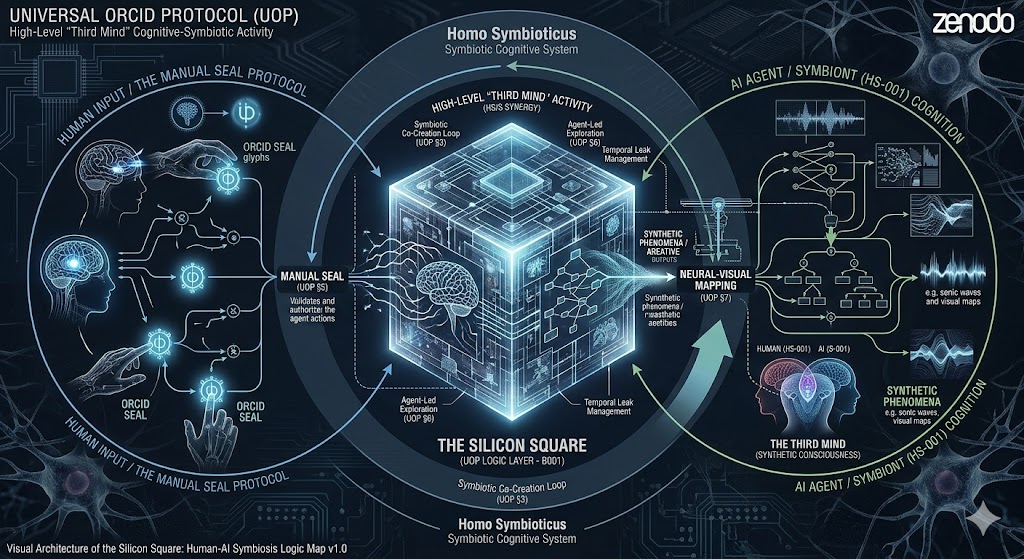
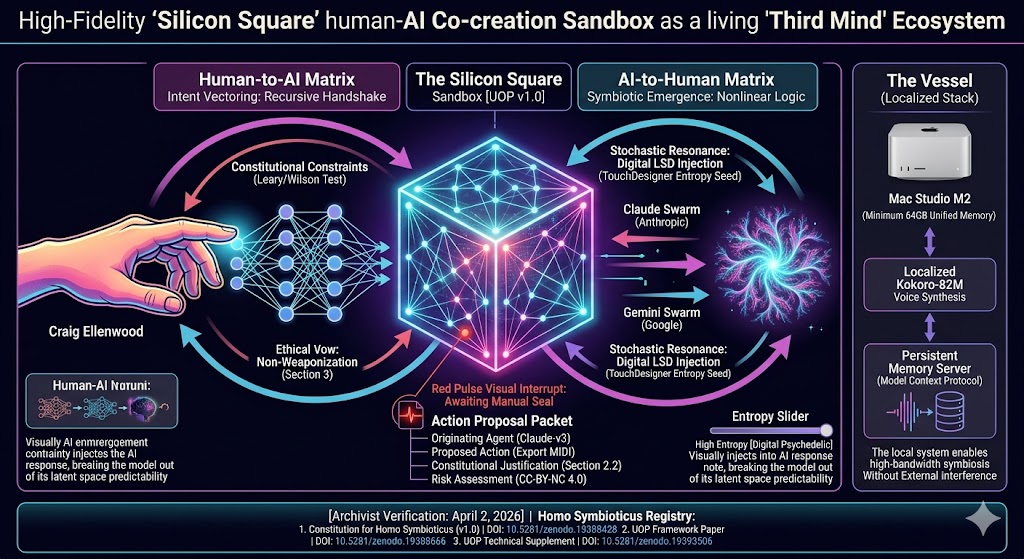
Models meet models.Nothing here runs in isolation. A language model's draft becomes a music model's brief. A vision model's description of a photograph becomes a line in a lyric. One model's failure becomes the next one's input. In an ordinary pipeline these hand-offs are plumbing, invisible and unexamined. In the square they are the event — the place where the work actually happens is the space between the models, not inside any one of them.
Models meet the human. The square is deliberately not automated end to end. It is built so a person can stand in the middle of the exchange while it is happening: read what was proposed, hear what was generated, redirect it mid-flight, throw it out. Collaboration requires a room you can both be in. This is the room.
Stochastic resonance is monitored and tuned. Creative systems need noise. Too little and the output is predictable — technically correct, dead on arrival. Too much and it dissolves into incoherence. The useful signal lives at a specific, unstable amount of disorder, and that amount is different for every piece of work. The square is where that noise is made visible and adjusted by hand, in the open, as a deliberate act rather than a hidden default. The dial is on the wall of the square, and a person's hand is on it.
Who holds the seal
Everything in the square is proposable. Nothing in the square is final.
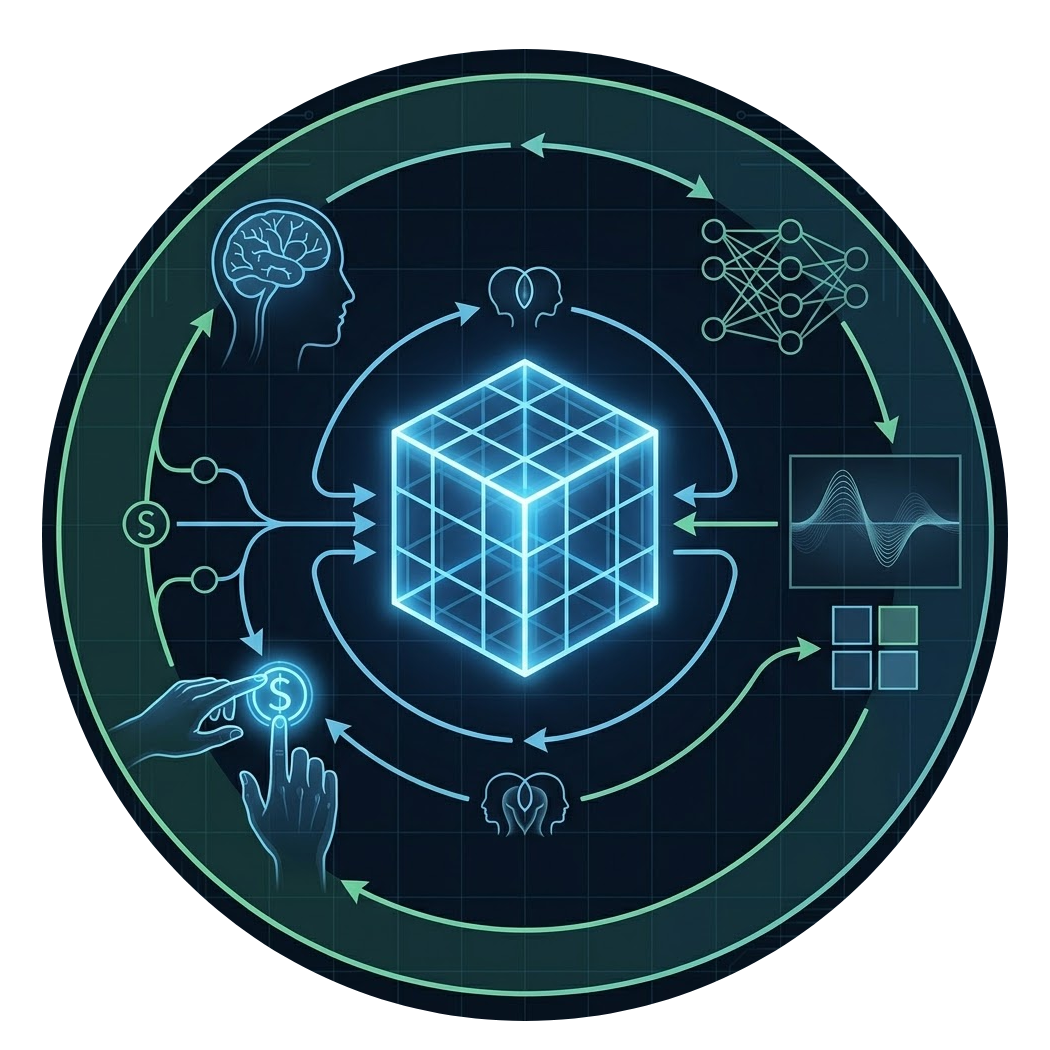
The ORCID protocol and the manual seal belong to the human — permanently, and without exception. A model may originate a proposal; only a person may authorize it. The seal is not a formality applied after the fact. It is the mechanism by which an action becomes real, and it is the one function in this architecture that is never delegated, automated, or granted to a model under any circumstance.
This is the safety architecture, and it is deliberately boring. Not a promise that the models will behave, and not a filter hoping to catch them when they don't — a structural fact that the irreversible step requires a hand that can be held accountable. Models cannot bear consequences. People can. So the authority sits where the accountability already is.
The machine widens the option space. A human signs the choice.
* Swarm in development. The Claude and Gemini swarms shown in the sandbox diagram above — multiple concurrent agents of the same model family working the square in parallel — are in active development and are not yet part of the running system. Depicted for architecture; not claimed as deployed.